Since your online presence is most definitely an extension of your writing self, when trying to put together the most comfortable, highest impact persona, you’re going to want to play on your strengths.
It’s not just about who we are and what we have to say, although that is a large part of it. The key to making this work for you is to have it spring naturally from your authentic self. Which means using our writing strengths to feed the online persona.
So, do you know your writing strengths? This week’s exercise is to write down what you think your top five writing strengths are.
The second part of the exercise is to think of three trusted people who know your work well. They can be writing group members, critiquers, beta readers, your agent, fellow writers. When they give you feedback on your writing, what do they say your writing strengths are? Your voice? Your use of language, humor, ideas, storytelling?
If you and your writing buddies/partners/group haven’t discussed this before, pick two or three people who know your work well and ask them what they think your core writing strength is.
Compare your list to theirs and see if there is a consensus.
The reason this is important in terms of your online persona is this:
To keep people coming back, your blog/FB page/Tweets will need to do one of the following:
Entertain
Inspire
Inform
Connect
Enlighten
Share
Your writing strengths will go a long way in determining which of those approaches will feel most natural for you.
Some blog topics or angles will only work if someone has a dynamite unique voice. It’s the WAY they tell it that makes it fascinating.
For others it will be their ability to CONNECT emotionally on the subject matter, or bring INSIGHT to the topic. Or perhaps simply they way they turn everything into a STORY of some kind.
To get a firm grasp on these different angles, go back to your own list of your ten favorite blogs that you like to read. Look at each one on there and ask yourself, Does the blog entertain me? Offer me much needed information and guidance? Give me strength and inspiration? Make me feel like I’m connecting with a larger community?
Which of those most closely match your writing strengths?
Some writers (and bloggers) have very distinct voices that come through loud and clear no matter what they’re writing about. No matter what they talk about, we’re entertained.
And then there are the rest of us. ☺
So for example, both here and on my personal blog, I think the ways I connect with blog readers are by informing and inspiring.
What I am sure about is that I am not entertaining. In fact, the mere idea of trying to entertain someone makes me freeze up, unable to think of a thing to say. I might be entertaining by accident, but pretty much never by intent, so writing an entertaining, voice driven blog is pretty much outside of my skill set.
That makes sense when I look at my actual writing strengths, one of which is, I think, my ability to slip inside wildly different skins and feel and be that person. It’s what allows me to write a 10 year old timid boy being dragged around the world by his intrepid aunt, a precocious eleven year old Edwardian budding Egyptologist, and a medieval teen assassin. So having a unique, defining, always recognizable voice simply isn’t one of my strengths.
But that’s okay because this exercise is about identifying what we DO have.
Do you love to research?
Are you totally obsessed with certain topics and consequently pretty keyed in to new developments and discoveries in that area?
Are you a lush, descriptive writer?
See things with a unique, unusual perspective?
These are just a few of the different sorts of writing strengths people have. I would lovelovelove if people would feel comfortable talking about their writing strengths in the comments, because then we could talk about what sort of blog those strengths play to. But I also recognize that can feel awkward to talk about—especially out in the wide open internet. To help out with this, all those brave souls who DO talk about their writing strengths will be entered TWICE in this week’s drawing. How’s that for motivation?
However, if talking about your own strengths isn’t comfortable, maybe you could tell us if the blogs you are drawn to entertain, inform, inspire, connect, enlighten, or share. Or if they do something else entirely.
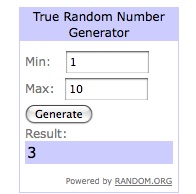
Speaking of which, the winner* for last weeks prize is…#3. lizamich! Please email me and I’ll get that out to you.
This week’s prize will be a copy of Made To Stick, a fascinating book about creating ideas that resonate, and that relates to the stories we tell. However, if you would rather have a copy of last week's The Hero Within, I’d be happy to send you a copy of that instead. Your choice!
*Methodology: I numbered the comments 1-10, skipping my own responding comments, then hit the ol’ random number generator.
Monday, October 25, 2010
Monday, October 18, 2010
Online Persona Workshop Week Three: Connecting the Dots
So by now you should have a couple of lists:
- Lists of blogs and online haunts you love
- A list of reasons you want to be online
- A good strong list of all your unique layers, roles, and facets
Okay?
This week we’re going to examine your writing self and look for natural connections or links to those other lists. There might not be any, and that’s fine. But there might be some dots that connect naturally and lend themselves to shaping and refining your online persona or niche.
The exercises this week focus around getting a sense of who you are as an author. We’re looking for that hidden core that links your stories together, and in turn, links them to you. (And some of you might recognize them from back when we posted about whether or not branding was for you. Which makes sense because an online persona is pretty much an extension of your brand.)
~List a dozen words that describe your work. Don’t be shy or falsely modest—think about what qualities your writing and stories have.
~List five stories you’d love to be able to write someday. Write a short paragraph or blurb that captures the essence of that story—the story juice that ignites your passion and imagination.
~List the last five books you’ve written. Again, write a sentence or two defining that core idea that compelled you to write it.
~Look at the themes of your books, both written and unwritten, are there a few you go back to time and again?
Do you see a pattern emerging? Are there connections to be made? If so, you are beginning to see the nuggets of your writerly persona.
So put this list next to the list we made last week. Are there any connections or pairings that make sense? Hopefully there will be a few.
And then we can step back and see if there is a larger authorial mission statement that can be created that includes both your ‘self’ and your writer-self.
As we said when we talked about branding:
Even though you write mysteries, historicals, and realistic fiction, if each one deals with mothers then you are exploring the landscape of mother/child relationships. Or maybe it’s more specific than that, mother/daughter relationships.
Or you write stories to help readers recognize the absurdities in life. Or you like to explore the limitations (or lack of limitations!) of emotional connections, or to help kids on the road to empowerment.
That’s what you’re looking for here, that core something that is uniquely you, that your comfortable talking about and that connects in some small way to your work. That is the nugget that you can begin building your online presence around.
You can let your core mission statement from the above exercise be the centerpiece of your interactions, then build on that. Instead of only writing books that deal with those topics, your tweets, your blogs, your school visits, your author talks all at least touch on some aspect of that core mission statement.
So for me, if I write about empowering kids and like to use fantasy as a stand in for personal power, and I am a research geek, it makes sense that I write historical fantasy for kids. However that doesn’t lend itself naturally to a blogging presence. I could conceivably blog about historical oddities, but I like to save the punch of those for the books. And kids don’t really read blogs, so blogging about their empowerment doesn’t make much sense. And the truth is, I’m more comfortable talking about that kind of stuff in the context of stories rather than lectures, which is what I’m afraid blog entries on that would feel like.
So now I have to sift through the lists again, looking for different connections. The truth is, my author blog is an odd amalgam of talking about the writing process, craft, books I read, observations on life, and talking about my books. It’s probably not the best example of a strong online persona. My presence here on SVP is a much better illustration of a cohesive online presence.
Which segues into this: It is probably best and most authentic if your online presence kind of evolves, much like we do as people. However, there is so much pressure to create this presence, and many introverts aren’t particularly driven to do that on their own (although some are) that sometimes we kind of have to jumpstart ourselves.
That, and this is what you all voted on. ☺
Also, to help spur comments on this, we’re going to have a drawing, and all you have to do is leave a comment to enter. You’ll win a copy of The Hero Within, one of my favorite books for delving into internal arcs for my characters.
But don't worry. You don't have to share your very personal exercises. However, if you DID find a defining nugget for your work and your self, or if you think you have an angle that might work to blog from, or you just want to say what you'd like to see covered in future workshops, any of those will qualify you for the drawing.
Monday, October 11, 2010
Online Persona Workshop Week Two: The Many Layers of YOU
We are all of us more than just one thing. Many of us fulfill dozens of roles in our lives and those of people we care about. Today we’re going to explore all those different facets of ourselves and look for fertile ground from which to create our online persona.
List all the roles you fulfill or all the things you do or are interested in. Include your hobbies, your profession(s), personality traits, Yeah, it could be a long list. All the more material to work with!
Spouse, parent, sibling, child,
Excellent cook, poor housekeeper,
Household tech support,
Writer, reader, publishing professional, critiquer,
Research geek, writing craft junkie,
Writer of MG, writer of YA
School presenter, workshop teacher
Introvert, reluctant public speaker
(unintentional) collector of clutter
(have you recognized this person yet? ☺)
Other things you could include on that list:
Seamstress, intuitive mechanic, homeschooler
Artist, Musician, Poet
Teacher, librarian, literacy advocate
Political junkie, pop culture geek, reality TV connoisseur
Ambidextrous, dyslexic, multi-lingual,
Life coach, dragon lover, wannabe hobbit
SCBWI volunteer,
You begin to get the idea. We are all comprised of so many different pieces and parts, and some of them or some odd tangential combination of them are what make us uniquely us. So this week’s assignment is to list all those parts of you. Take as much time as you need. Ideas may occur to you over the course of the next few days, so just add to the list. It’s a common fact of brainstorming that often those items at the bottom of the list are the most unique or unusual.
For Part Two of this exercise, once you’ve finished the list go back and examine it. You’re looking for traits or layers that feel unique and fresh to you, something that you haven’t seen someone else do already, AND that gets a little flutter of interest or passion moving when you think about it. Circle or put an x next to all those that apply.
In my list above, clearly the introvert and reluctant public speaker were the foundation for this blog. The other most interesting things on the list (I think, it’s hard to be objective about your own traits) would be unintentional collector of clutter, research geek, writing craft junkie, poor housekeeper. However, looking over that shorter list I also know that there are a TON of other writing oriented blogs out there already, so I would probably cross that one off. I would also suspect there are other blogs out there about being a poor housekeeper, but is there one that combines that with being a writer? IS there a way to do that?
Of course, it can also come from your area of expertise. A definitive blog on the ins and outs of school visits, say. Or a life coach. Or based on your passion for reading and writing middle grade novels. Or a geographical location, even.
A related but optional and FUN exercise is to start a list of things you love. Sit down for fifteen minutes and just begin listing all the things you love. Add to it over the next few days and weeks. It will be great raw material for later in the workshop.
I’ve learned my lesson from last weeks post and will be keeping today’s workshop short.
Next week we’ll explore those points where our most interesting layers connect with our writerly selves.
Also, if any of you are feeling brave, you can show us your list in the comments, again, anonymously if that’s more comfortable. If the blog feels too public to you, we could also take the exercise sharing to the (very quiet) yahoo group. Let me know if that sounds more comfortable.
Hm…I may have to start handing out prizes for class participation. ☺
(Also, if you note, I went back and split last week’s workshop into two posts so when I move it into the archives it will be less overwhelming. If you haven’t had a chance to do those lessons yet, you might consider tackling it in two parts.)
Monday, October 4, 2010
The Shrinking Violet Online Persona Workshop: Week One
The demand on authors to get out there and create a name for themselves is huge. Publishers, editors, agents, and marketing professionals all exhort authors to market themselves using social media. But clearly there are wildly different sets of expectations as to what being online means.
And that’s the goal of this workshop; helping you create an internet presence that you are comfortable with, that makes you accessible, and doesn’t feel like shilling. The workshop isn’t only about creating a new presence, but can also be used to refine, tweak, or revamp an existing one.
The truth is, the pressure to market ourselves online starts before we are even published! The problem is, there are already something like 14 billion blogs in existence, billions of Facebook users, and billions of Tweeters. How in the name of publishing, is an introvert supposed to get noticed through all that noise?
The answer is slowly, building one targeted connection at a time.
[Please note: This is an approach designed for introverts. If you are a extroverted online entrepreneur, this will most likely NOT be an approach that works for you, or even appeals to you, and that's okay. Since our mission statement is about introverts, that's what we're focusing on.]
Discovering one’s online persona is very much like discovering one’s writing voice; a fascinating and enriching journey inward. It’s more a matter of uncovering and re-connecting with what already exists in the first place. To really be effective at this, you need to wipe away market considerations and popularity considerations and go authentic. Just like the strongest writing voice, the strongest online persona will come from that truly authentic place.
What we will be doing for the next few weeks is going through a bunch of steps and exercises that will explore all the different areas that connect to our writing selves. Then we will sift through those and try to find the one that makes the most sense for you to work from as you develop an online presence.
This is not about creating a mask to hide behind or developing a fake persona, but rather discovering then developing an existing part of you.
That also means you have to be willing to go where the journey leads.
It may be that your most authentic online persona has only a loose tie in to your books. When Mary and I first conceived of Shrinking Violets, it had very little to do with marketing our own books. In fact, I’m pretty sure the number of books we’ve ‘sold’ through our presence here is minimal but that’s okay because an online presence doesn't have to be about selling.
A good persona can be about educating or informing or entertaining or supporting. It’s about providing something that resonates with people so they want to come back again and again and spend time with you. It can be about offering a service, but it can also be about building a community or a moment of respite from the frenetic pace of life. Be willing to be open to where this leads. Do not dismiss a particular angle because you cannot see how it will sell your books.
One of the first things you need to do is ask yourself: Why do you want to be online? What is the reason you are creating an online persona? This will vary greatly depending on where you are on your path to publication. Is it to create fans? Or connect with existing readers? To be a part of the writing community? To share your journey to publication with others?
These are hugely different goals and require different focuses and strategies.
To make it all even more confusing, our reasons for being online will often shift over the course of our career. A new writer starting out might want to connect with others for support and camaraderie, then once she sells a book, her presence might need to shift to focusing on the readers who seek her out online.
Clearly, as per last week's conversation, it is worth reiterating that an internet presence does not automatically translate into promoting yourself. Very few people (and even fewer introverts) are comfortable with that. So maybe instead of thinking of this persona/presence you’ll be creating as a sales, marketing, or publicity tool, think of it as simply raising your Visibility Quotient. It is a way to make connections with people so that they know you (and your work) even exist. It’s putting yourself in the path of the gods so that happy accidents can occur.
So. Why do YOU want to be online?
- Do you want to learn about writing?
- About publishing and the business end of things?
- Do you want to create an online community?
- Find an emotional support group as you go through your writing journey?
- A network of peers or fellow professionals?
- Talk shop with other writers?
- Advocate for a cause that you’re involved in?
- Fill a niche that you see going unfulfilled?
- Do you want to be an internet entrepreneur?
- Do you just want to sell books?
- Connect with existing fans?
- Create new fans?
Do you view your online hangouts as the office water cooler?
Or the bar everyone stops by on the way home from work?
Or perhaps an intimate group of a few like minded individuals you’re having coffee with at your kitchen table?
Okay, I can already see a lot of you thinking, All of the above, but at this stage in the process, you should probably try to prioritize what you want.
When deciding what you want to gain from being online, I think it’s crucial to understand what your publishing/writing goals are. (Since this blog is directed at readers, I’m going to assume writing, but feel free to substitute art, drawing, painting, book reviewing, whatever.)
If you haven't done this already, you might want to explore what role you’d like writing and publishing to have in your life. You can do that here. The answers to those questions are a huge factor in understanding why you want to be online.
Now you’re ready for this week's exercises:
1. Make a list of all the reasons you want to create an online presence. We talked about some of the reasons above, but there are dozens of different reasons. List as many reasons as apply to you. When you are done, mark the top three reasons with the numbers 1-3.
2. What emotion you want your online relationships to get out of their interactions with you? What do you expect them to take away from the experience?
3. What are you hoping to get out of these online relationships? (Be honest! If it truly is only a means of getting sales, you have to be willing to admit that to yourself.)
4. Make a list of your top ten online haunts. Study that list. What is it about each of those places that draws you or feeds you? What benefit do you get from those places?
Since these four exercises aren’t terribly personal, it would be great if some of you listed your answers in the comment section. (Anonymously, if you prefer!) That way we can clearly see any consensus or pattern in terms of why people want to be online, which will help with future workshops, and also WHO people are drawn to as blog readers, which will also be hugely helpful as we move forward and begin to analyze successful presences. You can absolutely leave the comment anonymously. Also, even if a ton of people have already listed the same reasons/blogs as you, go ahead and list them anyway—the reinforcement that comes from seeing how many people are drawn to a given thing/reason will also be helpful.
This is the first in a series of workshops on this subject, so check back next week when we begin to examine the many different facets of YOU and how those might connect to your online persona.
Sunday, October 3, 2010
Online Persona Publishing Goal Exercise
Sometimes in order to gain clarity, we have to back up and see the larger picture. When deciding what you want to gain from being online, I think it’s crucial to understand what your publishing/writing goals are.
Some of you might have already done this when we first talked about it here on SVP, but if you haven’t, one of this week’s tasks is to explore what role you’d like writing and publishing to have in your life.
- What is it you enjoy about writing? The creativity? The freedom? The discipline?
- Why did you START writing? Because of the voices in your head? You wanted to earn a little extra cash on the side? It was the only path you could find to fame?
- Why do you KEEP writing?
- Why do you want to get published? What do you think that publishing will bring you that writing has not? Make a list of those things you hope being published will bring you. Be honest, and then study that list carefully. Is what you want really something that can be obtained through the publishing industry? Or is it something more nebulous that is actually attained through personal growth?
- Where does the act of writing fit in your life? Would you do it no matter if you ever got published? How much does it take away from other things you love? Are you willing to keep making those sacrifices? How will creating/sustaining an online presence feed that?
- How do you define success in general? How do you define success in your writing? Getting a book published? Getting a book published well? (There is a difference!) Money? Critical acclaim? The contract in hand? A bestseller list? Connecting with readers?
Tuesday, September 28, 2010
Solutions: One Way to Deal with the Self-marketing Frenzy, Plus a Shout-out to Publishers.
Today, Sarah Prineas talks about the things publishers, editors, and marketing departments can do help their authors not feel quite so desperate and help turn down the volume on the AllMarketingAllTheTime Channel.
Solutions: One Way to Deal with the Self-marketing Frenzy, Plus a Shout-out to Publishers.
First, I’d just like to reiterate that yesterday’s post was a rant. My opinion, and the result of seeing social spaces co-opted by what I consider to be authors wasting their time promoting their books. Rant. Rant!!
#
So anyway, authors are marketing their books on social media sites, and I know why they’re doing it.
It’s because writers are control freaks.
No, it’s okay. I’m a control freak, too. As a writer, it’s part of the job description. We write our books, controlling every aspect of the setting, of our characters’ lives, and then we’re supposed to just let the book go and move on to the next book.
But we can’t. We can’t let it go. Many of us spend years, maybe, trying to perfect that first novel, get an agent, sell the book. So much of our sense of self is tied up in that process that we lose perspective and feel that our debut is our one chance to make it as a writer. Our entire career is riding on it. We delude ourselves into thinking that somehow we can control not just the book, but how the book is received, how many copies it sells. If we just do enough, somehow….
I can think of two ways to deal with these control-freak tendencies.
One, authors need to understand that every career trajectory is different and success has many different definitions.
It’s true that some debut books, a very few, do take off. Some careers start in the stratosphere. And that’s what we want for ourselves. Still, do you think those stratosphere authors stress about maintaining that kind of orbit? You bet they do. The control-freak problem affects every author, no matter how far out in space she is. For the rest of us, when we don’t hit the stratosphere on our first launch, we worry and stress that somehow we have blown our one chance, that we have failed.
We—all of us, both the authors in a high orbit and the ones living down where the atmosphere is breatheable—might do better if we change our perspectives, try seeing the big picture, the long game. We need to think about our careers instead of getting caught up in the success or failure of one book.
#
The next thing has to do with publisher expectations. So many of us get desperate because we have no idea how our publishers define success or failure. We think they want every book to be a bestseller. Well, maybe they do, but they don't expect every book to do that. Some books--the ones with a smaller marketing push--will succeed if they meet certain lower expectations. Hey, a book with huge expectations that sells only a few more copies than a more modest book could be a bigger failure!
The problem is that the entire publishing process is so opaque to us writers. We have pretty much no clue how our publishers feel about us. They tell us almost nothing. We get clues, little crumbs of information, and we parse these coded messages, trying to figure out what is really going on. Our editors may say nice things to us, and that makes us happy, but we generally don’t know how committed they are to our careers. Goodness knows, we’ve all heard horror stories about authors being dropped by their publishers. What if that story turns out to be about us? Ack! Nooooo! The problem is that we assume, because of our publishers’ opaqueness, that the publisher doesn't care about our books and isn’t going to promote them as much as our books deserve, so in desperation we try to make up the ground ourselves.
Incidentally, I think publishers care very deeply about our books, and they are not trying to make us crazy by keeping the process opaque. I think they see how wrapped up in our books we are, and they treat us tenderly because of it, but they don’t really understand it. Their solution is to keep us in the dark because the opaqueness keeps us freakazoid authors out of the book-making/book-marketing/book-selling process. Which is where we belong, because we are not book-makers or book-marketers or cover designers or copy editors or part of a great sales team. We are writers. We need to shut up and write, and be cheerfully available if our publishing team needs us for something.
On the same hand, for editors and the rest of the publishing team, putting out a book is business as usual. They don’t explain stuff to us because they already understand it, and it may not occur to them that we need to know all that stuff, because it’s not our job. No, our job is to, ahem, see above about shutting up and writing the next book.
But we are control freaks, after all, and we do want to know what is going on with our books. And there are things our publisher could do for us to help us writer-freaks deal with the anxiety and horror (and, yes, occasional awesomeness) of having a book published. All they need to do is be less opaque about their expectations for our books. Here are some examples of the kind of things our publishers might tell us about their expectations which would, in turn, help us to manage our expectations:
"We are putting a lot of marketing money behind this debut and have announced a print run of 100K, so if it doesn't hit the NYTimes list we'll be a little disappointed. However, if the preorders for the author's second book in the series remain steady, we'll be happy."
"We expect this debut to sell mostly to libraries. If it sells 5,000 copies we will be thrilled."
"This quirky debut novel is not commercial, but it's a house favorite and we're hoping it will find an audience. We'd love to keep building this writer's career, though we don't expect overnight success."
"This literary book feels like an award contender to us. We'll publish it hoping teachers and librarians take notice, and we'll focus our marketing efforts on them. If it doesn't win an award we probably won't do much more for it."
"We bought this novel based on a strong proposal from an established author, but the book she turned in disappointed the editor; it is not the strong book we expected to see. We won't give it a marketing plan and don't expect big sales."
"To our surprise, this book received starred reviews from Kirkus, Publisher's Weekly, Booklist, and School Library Journal. Our expectations for it are changing and we're going to add a little more marketing push in hopes of seeing bigger sales than we initially expected."
Wouldn’t it be great to have that kind of information up front? To have a clear, straightforward explanation of the publisher’s expectations for a book? It might not be nice to hear “we don’t expect a bestseller,” but wouldn’t it be good just to know?? That way we could chill and, you know, go write the next book.
#
That is all! Thanks for reading.
Sarah Prineas is the author of the hugely popular Magic Thief books, the first of which was an E. B. White Read Aloud Honor Book as well as an NCTE Notable Children's Book and has appeared on numerous state lists and has been published in twenty-one different countries. She has a PhD in English literature and has taught seminars on science fiction and fantasy literature. Her next book with HarperCollins, WINTERLING, will be out in 2011.
~~~~~~~~~~~~~~~~~~~~~~~~~~~~~~~~
Thanks everyone, for participating in this lively discussion! See you all next Monday!
Monday, September 27, 2010
I Will Be Your Friend, But I Will Not Be Your Fan: A Rant About How Authors Use Social Media For Self-Promotion
One of the upsides to Twitter is that you sometimes get to meet fabulous people you might not run into otherwise, which is how I came to meet Sarah Prineas. Turns out we had a lot in common, not the least of which is how we feel about people misusing social media. I stumbled upon a discussion on her blog a while back and asked her if she’d come over here and share some of her thoughts on the misuses of social media here with us on Shrinking Violets. I Will Be Your Friend, But I Will Not Be Your Fan: A Rant About How Authors Use Social Media For Self-Promotion
A couple of months ago, I posted a blog entry in which I asked commenters to share their opinions of authors’ use of social media.
By social media I mean places on the Internet that would seem to exist for social purposes. Not places where you make business connections, like Linked-In, and not places where you sell your stuff, like Ebay or Craigslist. Specifically I mean Twitter and blogs. (I’m not counting Facebook because…you know, it’s Facebook. Ugh.)
We are, of course, still negotiating the boundaries of social media, figuring out how to create a public persona, learning to be friendly with people we’ve never met before, deciding what personal details to share and what is too private. We’re also trying to figure out what community is online and how best to build a sense of community with the friends, acquaintances, and random strangers that make up our social circles on the Internet.
Ideally, I think, social sites are for friendly conversation and debate, for sharing good news and bad news, for meeting new friends, for posting amusingly captioned cat pictures. The community we’re building is a community based on friendship. Now, we humans have verrrry sensitive antennae when it comes to our social interactions. We can tell when somebody is being friendly versus when they’re trying to sell us something. When authors intrude on social spaces with their self-marketing it can make our antennae twitch like crazy.
Granted, if you’re a writer and you’re blogging about your life and what you think about, of course some of your blogs or tweets are going to be about your book, or about your happy book news. That’s fine. That’s not what I’m talking about.
No, I’m talking about the blogs and twitter-feeds that may be partly social, but which pollute the social ether with self-promotion and book marketing. They exist, mostly, to sell books.
Unfortunately for them, author shilling does not sell books.
It just doesn’t.
You know what does? Sometimes it’s a top-down effort by the publisher. The big push. Just as often, it’s word of mouth. Almost like the book is speaking for itself! Or it’s a combination of the two (publishers, often enough, get excited about publishing good books that readers love!).
I know what you’re thinking. What about when a book isn’t getting a big push from the publisher? Shouldn’t the author pick up the slack and market herself? Won’t that be kind of like word-of-mouth?
No. Because…I’m sure I’ve heard this someplace before…author shilling does not sell books.
Still, it’s true that social media can sell books. My favorite example of this is Megan Whelan Turner. As far as I can see, the woman does almost no social media stuff herself, yet Conspiracy of Kings was a New York Times bestseller. It's the fourth book in a great series, and while MWT was not out herself urging people to buy it, the book had tons of enthusiastic readers spreading the word via twitter, their blogs, and a lively discussion group. Hey, I even blogged about it myself. MWT didn't have to push people to do this. They did it because the books are great and well loved. That is how social media should sell books. Not via authorial top-down selling, but via true fandoms.
It seems to me that authors who shill for their books online might be trying to replicate this phenomenon, like what we saw with MWT’s book. But I don’t think that kind of success is something within our control.
Okay, but what if the author’s editor encourages her to blog or join Twitter, or basically to create a more public, social persona online in order to market her books? Well, frankly, I think said editors should think more about what they’re asking their authors to do. There is this sort-of received wisdom in publishing that online marketing is the new big thing, the best way to get the word out about books. Also, publishers have this throw-spaghetti-at-the-wall approach to marketing. They work hard, do a lot of stuff, and hope that it sticks.
And really, truly, this particular approach doesn’t stick. Here are some of those non-sticky things that authors do that might make the social antennae twitch, things that might not be building friend-community, but some kind of more perniciously commercial space.
Blog tours and contests. The commenters to my entry agreed, by the way. Blog tour interviews are boring. How often do you actually read more than one of them? And the contests. What about the ones with the complicated rules, like that you have to comment to enter and tweet about the contest and post it on your Facebook page, and get a tattoo of the book cover on your face? To be the author’s street team—to do the marketing for her! How lovely for you, reader, to not only have your social space co-opted for marketing, but to be co-opted yourself!
Or the contest where the winner gets a bookmark or a postcard or a crappy magnet with the book cover on it. Sheesh. A contest where the prize is a marketing tool! Genius!
Or the “fan” page on Facebook. I don’t know about you, but every time I get an invitation to be somebody’s “fan” it’s an automatic delete. As in, I delete the social connection. I will be your friend, but I will not be your fan.
Or the twitterers who re-tweet every single freaking mention or review of their book. Boring!
Oops. That got ranty. Sorry. See title, above. This is a rant.
Anyway, the sad thing is, anybody who is using their blog or twitter to market their book is wasting their time and energy. Who are their books’ readers? Do they read the author’s blog? Maybe a few of them do. Is selling to those very few people worth annoying the many more people who are reading the author’s blog for social reasons? LiveJournal and blogs are an echo-chamber, an insular community, and so is Twitter. Authors who self-market are not reaching new readers via social media. They are reaching the same very relatively small group of friend-people over and over and over again.
This is especially true for writers of middle-grade fiction. You might reach a few gateway readers—teachers and librarians. But your kid readers are, for the most part, not reading your blog or your twitter-feed. A few kids will find these places and want to interact socially with you. But most are not online all that much.
Now, there will be rare exceptions to this rule. People who manage to use their blogs or twitter-feeds to successfully self-market their books. Props to them. They are still annoying.
So how does an author know if she is getting marketing all over the social spaces? She must ask herself: “Why am I on Twitter? Why do I blog?” If the answer is, “because I like it and to make friends,” then the author is probably doing okay. If it’s “because I desperately need to help my book do better,” well…
There you go.
The best writing advice I ever heard was from an extremely successful writer of MG and YA books, and it was about self-promotion. The advice was, essentially, this:
Don’t bother. Just write the next book.
#
To sum up, there's more to lose, I think, than gain through authorial self-promotion. As the comments to my blog make evident, lots of people are annoyed by it. We’re authors, we’re not marketers; we seem amateurish and desperate when we do it. Maybe we just need to quit self-marketing and write the next book.
##
(Still, I get why authors self-market. If you’re annoyed by this rant, do tune in tomorrow, because I have further, less ranty things to say about that.)
Sarah Prineas is the author of the hugely popular Magic Thief books, the first of which was an E. B. White Read Aloud Honor Book as well as an NCTE Notable Children's Book and has appeared on numerous state lists and has been published in twenty-one different countries. She has a PhD in English literature and has taught seminars on science fiction and fantasy literature. Her next book with HarperCollins, WINTERLING, will be out in 2011.
~~~~~~~~~~~~~~~~~~~~~~~~~~~~~~~~
Hopefully that will give everyone some food for thought as we begin our online persona workshop next week. One of our first tasks in that workshop will be to determine the reason we're online and what we want to achieve with our online interactions.
Also a big, whopping thank you to everyone who added a comment to last week’s post on offering encouragement to discouraged writers. I’ll be compiling them all in a page (as time allows) and will announce when that link goes up. However, I did want to announce our winner who, according to Random Number Generator is Number 10! Earthsdivide! If you will email me with your info, I will get your prize out to you this week!
Subscribe to:
Posts (Atom)