Monday, February 28, 2011

Managing Your (Computer!) Time


As we discussed a couple of weeks ago, the INTeRnET can be an INTRovErT’s best friend. Never before have so many introverts been able to connect and socialize with others (also often introverts) from the comfort of their own home and on their own time table. It is a great tool—when we don’t allow it to overwhelm us.

This week I’m going to share some underutilized tools most of us have at hand that can help us control the internet and the demands it makes on us and our oh-so-finite time and energy. In order to manage all that is available to us, it is more important than ever to use all the time management organizational tools available to us.

  • Create Inbox folders (using Rule function with Outlook Express or Entourage) that send email directly to the designated folder where you can then choose when to read it when you're ready. It's surprising how much less overwhelming it is to not have every incoming thing cluttering up your inbox and demanding attention.

  • Consider the Digest setting for yahoo groups or listservs.

  • Organize your web browser’s bookmarks. Create folders on your toolbar that are separated or defined by their function and use to you. For example, instead of having an RSS feed where everything comes into your inbox, demanding attention, consider having a series of Blog folders grouped by their role in your life: whether they inspire, inform, or are for socialization.

  • Use a blogging platform that has a pre-scheduling feature. That way when you have a bunch of ideas or are feeling in a social mood, you can sit down and whip out a couple of blogs posts and then parcel them out on a more regular schedule. (Not that I ever do that. I write each and every one of these posts at 5:00 Monday morning then hit publish immediately!)

  • Depending on how you use Twitter (say, for broadcasting purposes) consider one of the many Tweet Scheduling programs. (I bet we could get Greg Pincus to tell us which ones he recommends!)

  • If you want to experiment with chats on Twitter, DO be sure to use TweetChat. I cannot even begin to tell you how much less stressful this is than just following the hashtag. Having said that, however, tweet chats are still pretty stressful for me (and my eyeballs.)

  • Freedom for PCs and Macs– I first heard about this from Lisa Yee. It's a program that basically locks you out of your internet connection for a set amount of time so you can, you know, write something.

  • If you work across multiple platforms and share the same content them, take advantage of the cross referencing tools available. For example, set up your blog to feed on Facebook (no, I haven’t done this yet) and set up your Twitter and FB status updates to cross feed.

So how about you guys? I know you all must have some brilliantly helpful tools and practices for managing all this. Please enter your favorite internet strategies and tips in the comments and I’ll add them to this post. Everyone who enters will get a chance to win a SIGNED copy of Introvert Extrordinaire Mitali Perkins’ BAMBOO PEOPLE. And if you don't have any tips, but you want a chance to win Mitali's books, you can just say "hi" in the comments. :-)

Lastly, in the comments to last week's interview with Jennifer Laughran, Jennifer left a terrific link  that some of you might have missed, so I wanted to be sure and point it out to you. http://www.tribalwriter.com/2011/02/22/should-you-be-blogging-to-help-build-your-writing-career-or-is-it-a-waste-of-time/

I stumbled on the Tribal Writer blog a few weeks ago and find it very helpful. Justine comes from a slightly more entrepreneurial place than I do, but even if one is not geared that way there are still a TON of great thought provoking ideas. 

Monday, February 21, 2011

An Agent's View: Talking with Jennifer Laughran

Okay, I know I promised you practical tools for managing online information but I was just SO DANGED thrilled about this interview that I decided it couldn't wait another week, while practical online tips most definitely could.

I am HUGELY excited to share with you an interview with Jennifer Laughran of the Andrea Brown Literary Agency, better known to those of you on Twitter as @Literaticat.

In an industry that can often overwhelm and confuse, Jennifer is an invaluable, accessible source of publishing insight and helpful information. After reading her blog and following her on Twitter for lo these many months, I felt sure that many Shrinking Violet readers would benefit greatly from some of that insight...

SVP: Are you an introvert? How about your clients, would you say a large number of the writers you’ve met are introverts?

JL:
I am sort of a mixture. I can be quite outgoing, "on" - I am quite noisy and confident when in this mode, and I'm OK with talking to large groups or strangers. But I do need a lot of time to decompress afterward. I'd say for every hour of "on" I need two of quiet alone-time.  I am not sure how my clients would define themselves in this regard. I'd imagine that most of them are kind of like me - able to be lively raconteurs, but possibly work better in solitude.

SVP: Your client list is widely varied and includes debut authors, those who have published a few books, and those who’ve been publishing for years. Can you pinpoint what qualities those authors or their writing have in common that drew you to them?

JL:  They are all at the top of their form. Their work is all totally different, but always fun to read. They are all pretty much straightforward and open communicators.

SVP: What is your agenting style? Are you a hands on agent editorially? A shark?

JL: I do read and give notes, but the are likely to be big-picture or "Meta Notes." Like, I might tell you that I feel the main character seems too young to be credible and ask you to consider aging her up a bit. But I am unlikely to give detailed line-edits or copy-edit type notes. My authors tend to give me pretty polished work (and if it wasn't almost ready, I wouldn't have taken it on to begin with.) So, yeah. I consider myself a SELLING agent.

SVP: What do you think aspiring authors would be most surprised to hear about agents in general or you in particular? 
JL: I think there is a lot of mystique surrounding agents. In fact, we are quite normal, and rarely drink writer blood.

SVP: What is the one biggest misconception authors seem to have about the publishing business?

JL: Many people think (quite erroneously) that there is some easy shortcut to publication that nobody is telling them, and that once they are published everything will be covered in rainbows and sparkledust.

In fact, getting published is mostly a very long, very slow, at times quite painful, slog. It is HARD WORK to be a great writer. Publishing is SLOW and AWFUL much of the time. I mean, don't get me wrong, it is probably better than digging ditches, and there can be moments of profound glory, but it isn't a get-rich-quick scheme by any stretch, and it won't make you happier or more fulfilled if you aren't those things to begin with. 

SVP: You are not only a literary agent, but a bookseller as well. Did one lead to the other? In what ways does the bookselling inform your agenting?

JL: Well, I've worked in bookstores since I was twelve or so. My older sister owned a bookstore for many years and I was raised in a very booksellery family. I worked in children's bookstores throughout school and college. Then when I got older, I became a buyer and events coordinator for an awesome big indie in San Francisco. All of this has definitely informed my agenting - first of all, I came to agenting already knowing a ton of people in publishing, a ton about how publishing works, and A TON about kids books. Also, a bookseller is a tastemaker. Booksellers are evangelists for books that they love and handsell them to (often initially reluctant) customers. This is basically the same thing I do now, just on a different scale.

SVP: What is the biggest mistake you see beginning authors make? 
JL: Beginning authors tend to torture themselves so much with the most minute and ridiculous things. Like endless stressing over word count, and how to format this and that and blah blah blah. While the internet is great and allows getting information to be easy, it is also awful because getting MISINFORMATION, or conflicting information, is just as easy, so many authors wind themselves up in knots. Here's the deal: Be a good writer, with good ideas. Follow the directions as best you can. When in doubt, use common sense and common courtesy. Stop freaking out. Here's a good blog post on the subject:

http://jaclyndolamore.blogspot.com/2011/01/dear-querying-writers-use-common-sense.html

SVP: Other than having a website, what other online activities and platforms do you think authors should participate in?  If an author could only do three things to promote and market their work, what, in your opinion, should those be?
 
JL: I feel like authors should focus on their writing FIRST AND FOREMOST. If that means that they do less self-promotion, well, that's just the way it crumbles. I do think it is awesome and amazing when authors are great bloggers, or have entertaining and enlightening twitter-streams, or whatever... but maybe that isn't you.

I think that if you want an online presence but are not naturally internet-savvy, it is worth exploring the options (blogging? facebook? active forum participant? twitter? vlogging? group blogging? teaching online classes?  a combo, or something else entirely?), then picking just a couple to really focus your energy on, rather than trying to become great at everything. If you have a blog you never update or that you clearly hate writing on, or a boring, self-congratulatory or irritating tweet-stream, it hurts you more than it helps you.

FURTHER, I think that when everybody does the same things to try to get attention, nobody gets attention. So while it is nice to say "yay, I am a debut author, I'm in a marketing group!" - look, there are 75 others just like you in the same "marketing group", and that kind of loses its impact. Not to say you oughtn't be in it - but I would really spend time focused on playing to your own unique strengths, and what makes your book and your point of view DIFFERENT from the other stuff out there.  (Sort of like how you have done with Shrinking Violets!)

So three things... hm. Personally, I'd get to know real live booksellers and librarians and work on really building up my mailing list with quality folk. I'd have a fun and informative website. I'd probably have a blog and twitter, because I like doing them. But your three things might be totally different - and that is a GOOD thing.

SVP: Can you tell us what author platform means to you and how much of a factor that is when deciding whether or not to take on an author? Do you see an author’s platform affecting how an editor/publisher responds to a submission? Does that vary from publisher to publisher?

JL: Platform is really something that matters a lot when you are talking about nonfiction. Like, if you have written a book about polar bear rescues, and you are the president of the Polar Bear Society and have access to their mailing list of 2 million Polar Bear devotees, this is definitely important and worth mentioning up front.

For fiction, though, I am not convinced that platform really matters all that much. Sure if you are FAMOUS (have a TV show, or a show on NPR, or similar) that is awesome and will definitely help you immensely - but other than that?  Nah.  It can be a nice bit of extra sauce to a publicity package if, for example, you've written a thriller about kids dealing with climate change and megastorms, and you are an expert in that field - but it wouldn't convince a publisher to go for the book, if the book wasn't worthy on its own.

SVP: In what way has the rise of social media and increased online avenues benefited authors? In what ways has it made things more difficult?
 
JL: Social media gives people a chance to put themselves out there more easily. But it also gives people a chance to put themselves out there TOO easily.  Sometimes the conversations we have online feel like a handful of great friends gossiping and gabbing in your kitchen... but in fact, you are in public, not at a sleepover. Personality definitely shines through and will help you stand out, but you have to figure out how to be personable and personal without being weird or offputting. It's a fine line sometimes. :-)

SVP: One thing writers hear a lot from agents is the recommendation to not compare yourself to others. While that’s most excellent advice, it is often hard to follow. Do you have any words of wisdom or tips to offer writers how to specifically guard against those unhelpful comparisons? Are there concrete ways that comparing can be detrimental, not just demoralizing?


JL: The thing to remember is, every book has its own path. Literally NO books that I have agented have been bought or published the same way. Some take a long time and lots of hard work to sell, some get snapped up in a hurry at auction. Some get a huge advance, some... don't. Some are rushed to press with very little in the way of work done, some take years. Sometimes books with a huge advance get a lot of publicity... but sometimes they get ignored. Some books are orphaned or ignored, but go on to be big successes. There is just no way to predict what will happen with any given book when you start out, and especially not once it is published and sent out into the world.

It kills me when authors compare themselves others, "my editor took longer to get back to me than she did with so-and-so, so she hates my book" or "I didn't get a good advance, so I'm doomed" or "I didn't get a pre-pub tour/get invited to BEA/have a tour set up for me, so my publisher doesn't believe in me" or whatever other insanity (and I have heard a LOT of insanity!). Authors have a tendency to be neurotic at the best of times, and the free access to too much information (via other author blogs, marketing groups, or similar) seems to exacerbate the neuroses for a lot of people, to the point where even very smart authors can make themselves sick, or stop being able to produce good work.

If you are caught up in the envy-paranoia-despair trap, I strongly recommend this blog post by Lisa Schroeder: http://www.lisaschroederbooks.com/2011/01/why-oh-well-needs-to-become-authors.html

SVP:  What three authors, other than your own, living or dead, would you like to have dinner with?

JL: E. Nesbit, Bertolt Brecht and Oscar Wilde. I don't know if they'd get along, but it would amuse the heck out of me.

SVP: What was the moment you realized you wanted to be an agent?

JL: From being around the book business, of course I knew that agents existed, but I honestly didn't know what they did exactly and didn't think too much about it. Then I met a very cool agent at a book event and we went out for drinks and food after with a bunch of his clients. A bunch of happy writers and a fun, funny and smart agent. YAY! His enthusiasms and interests seemed aligned with my own and he clearly had a total dream job. So, I looked more closely at it, got an internship, worked hard (for years. for free.) while learning the ropes, and it turned out to be a really good, natural fit for me.
 
SVP: Do you believe that cream rises? That great writing will always find a home? Or in some cases does great writing overlooked due to the realities of the marketplace?

JL: I honestly think that great writing will find a home, provided it is accompanied by ingenuity, perseverance, patience and flexibility.

A person can be a talented writer, but if their work is old-fashioned and they won't or can't revise it ... or if they don't have the gumption to actually send their work out... or try another story if the first one doesn't sell... or if they get too freaked out by uncertainty or can't handle critique... well those folks might be better off in a different line of work.

Monday, February 14, 2011

Managing Information Overload


The internet can be a wonderful thing, or it can be the most overwhelming time sink known to man. Indeed, it is both and I think one of the trickiest balances is finding how to use the internet so that it keeps one informed and abreast of one’s industry, without drowning us in too much information.

How do we find that balance? How do we learn to filter out the 24/7 onslaught of publishing tips, publishing trends, publishing warnings, writing rules, writing tips, and writing Must Dos? Not to mention all the marketing and promotional directives orders commands advice out there? The problem with the internet is that the information available is infinite, and our time is not. It is so easy to sit there and follow the trail of links, certain that they will lead us to the One Vital Answer that we seek, when all they are really doing is taking us away from more important and nourishing tasks.

For me at least, this is where the discipline part of writing comes in. I have no trouble producing pages, it’s the blocking out unnecessary ‘information’ that lurks everywhere, promising to inform and enlighten me to within an inch of my life.

For example, I keep reading everywhere that authors need to be ready for the coming revolution in publishing, whether than means e-books only, or no gatekeepers or fitlers, or all our books available free on the internet and the collapse of the paying model, such as what happened in the music industry. But you know? There just isn’t much I can DO about any of that. There is no proactive action I can take to ‘prepare’ myself other than be aware that it might happen. Some people feel that because of those coming changes authors need to be even more vigorous/vigilant about building an online presence and following so they can interact directly, but you know what? Nearly every author I know who has the desire and the temperament is doing that already.

Which is why I have stopped reading those sorts of articles. I found one or two sources which I've found to keep me informed, and I ignore the others.

The thing is, yes, it is good to be informed as to how the industry works in general. But 95% of the stuff we read about is not something in our control. Most of us have no control over distribution or what the publisher does to market us, or get word out, and most of us simply don’t know thousands of people to tap into.

So I try to limit my internet information intake to those things that help me do better those things I am committed to doing.

And I try to eliminate that information which serves no actionable purpose. For example, I don’t subscribe to Publisher’s Marketplace when I’m writing a book. Yes, those deals are fascinating and numbers are like crack to me, but dear gawd, every time I read one of those suckers I begin comparing and competing and get all tangled up in the very least desirable aspect of writing. The only time I subscribe is when I have a new project I’m shopping, then I cancel the subscription.

Even information I am interested in, profiles of new writers and books, for example, I only ‘take in’ on certain days or after all my writing is done for that day.

Which is I am so in love with my Holy Trinity of Guiding Principles: Trust, Nourish, and Persevere. Is this article, blog, tweet feed helping me to trust in my process and skills? Is it nourishing either of those by helping me expand my boundaries and try new things? Or is it helping me persevere in those areas of the business that I need to apply perseverance? If not, I need to seriously question whether it’s something I need to spend my time and energy on.

I highly recommend a cyber spring cleaning at least once every six months, although I think once a quarter is better. Our needs and process change and evolve, probably more quickly than we think we do. Go through and evaluate each of those online places where you spend your precious time and psychic energy. If you have one word for 2011 or developed a trio of words, run each cyber haunt through that filter and see if it still fits. If it doesn’t, stop visiting it.

It doesn’t have to be a permanent break up; you can keep it in your bookmarks, just don’t visit every day or remove it from your blog feed. It can just be a hiatus—to see how you do apart. You might find you don’t miss it a bit, that your psyche gives a big, relaxed, ahhh, now that it doesn’t have to process/juggle/wade through that cyber information.

So here is my challenge to you: see if you can reduce your online intake of information by at least one third. One half would be even better. Next week, I’ll present some practical technological tools for juggling the remaining half…

And the week after that? We have a Super Exciting, Seekrit Guest Interview which will make you all very, VERY happy!

Monday, February 7, 2011

Literary Agent Erin Murphy: Success Is Like A Snowflake, Too


[I am very excited to share with you the wisdom and perspective of my agent, Erin Murphy in today's guest post!]

Success is Like a Snowflake, Too

It’s not just writing careers that are like snowflakes—it’s equally true that the success that each writer experiences is unique.

This is something my clients and I talk about a lot as we look at the big picture of their careers. Some big quantifiable measures of success out there in the publishing world for all to see: Bestseller lists; deals that Publishers Marketplace calls “very nice,” “good,” “significant,” or “major”; star treatment at conventions like ALA; special placement in chain bookstores; starred reviews and awards; Amazon rankings.

And those measures are even more visible today than they were just five years ago, thanks to the many authors and industry professionals who talk about their experiences on Twitter, Facebook, and blogs. Sometimes I think it must feel impossible to believe anything else is important when you’re a writer.

These seemingly quantifiable measures are simply not as concrete as you might expect. There are many articles out there about the myth of the bestseller list and the Amazon ranking, and about the negatives of large advances. And the major chains (perhaps soon to be the singular “chain,” although I certainly hope not) carry such a small percentage of new books on the bricks and mortar shelves that I believe our entire industry needs to stop using a buy-in from the chains as any kind of requirement for satisfaction.

However, these things are not the only measures of success in publishing. It might appear that way, but it’s just not true.

In Robin’s case, it was tremendously helpful for us to realize that she had reached a benchmark point in her career: her publisher values her steady contribution to their catalogs and sees her as a lifetime author, someone whose work is valuable on their backlist and continues to grow in value as she continues to publish and grow creatively. While her sales figures aren’t bestseller-level, they are steady, and most importantly, her publisher is happy with them.

There are many authors out there that don’t know or understand that their publishers are happy with their sales, or aren’t sure their publisher will want the next thing they write. So having achieved this is huge, but it isn’t quantifiable. And it certainly isn’t as sexy as a significant deal or NYT Bestseller designation.

The danger of the most obvious benchmarks is that it’s too easy to fall into the comparison game, stacking up your own career against someone else’s. You can’t compare apples to oranges, and you can’t compare one snowflake to another and declare one prettier or better.

The author whose books have never been carried by the chains is jealous of the one who has a presence there. The author who has never had a starred review is envious of others who have. The authors who are unhappy with their advances are jealous of having never cracked the elusive “very nice deal” ceiling. But oftentimes there is a darker side to each of those scenarios. A huge buy in from the chains can mean equally high returns. The stress of earning out big advances can rob writers of their joy in creating the next book—or even block then entirely. Or that NYT bestseller might suddenly find themselves pigeonholed by their publisher for a type of book they’re not compelled to write anymore.

If each one would note the success she has achieved instead of what she hasn’t, the writing world would be a happier place. How many times have I pointed out to a client that she’s so fortunate that her books always get carried by the chains, for example, only to have her say, “But that always happens! I never get ___!” Yes! It always happens! And many other writers long for it to happen. Appreciate your successes; don’t downplay them.


This is not to say that it’s not okay to have goals to reach new kinds of success—but you will stay much more sane if those are goals you have some measure of control over. Most of the high visibility measures of success are completely out of your control—and therefore crazy-making.

Here are some other ways to measure a successful writing career. They don’t get nearly as much attention and buzz as their higher profile cousins, but they can be vital in solidly anchoring a writer’s success:

• Passionate hand-selling by independent booksellers.
• Inclusion on state library lists.
• A happy, nurturing, and fruitful editorial relationship.
• A happy, nurturing, and fruitful relationship with the entire team at the publishing house.
• Acceptance of the author for inclusion on panels at state and national conferences for teachers and librarians.
• Regular publication of new books.
• Sale of subsidiary rights (audio, foreign, etc.).
• Regular requests for school visits.
• Generally positive reviews of each new book from the major publishing review media.
• Featured placement in book club catalogs, teacher resource guides, and the like.
• Inclusion of a book or body of work in the national or international discussion of an important or issue, indicating the book has helped raise awareness.
• Fan mail—especially deeply personal fan mail that shows a writer has reached readers at crucial moments or has turned non-readers into readers.

I could go on and on, and still just be talking about outward signs of success—we haven’t even touched on the writer’s joy in the process, satisfaction with pushing herself creatively, or engaging with readers directly, which are also valid, but very different, measures of success.

One of the many things that stood out for me when I read about Sarah Zarr’s much-talked-about speech at the 2011 SCBWI New York conference was what she called “the commodification of creativity”: valuing your creative work “only in the context of the marketplace.” Don’t let that happen to you. Each individual success is worth noting, celebrating—and claiming for your own.

# # #

Erin Murphy founded EMLA in Flagstaff in 1999. She works with publishers of all sizes all over the U.S., and has placed clients' books with every major children's house in New York and Boston, but she cut her teeth in regional publishing. Erin represents writers and writer-illustrators of picture books, novels for middle-graders and young adults, and select nonfiction. She is especially drawn to strong characters and heart-centered stories.

Monday, January 31, 2011

How Writing Careers Are Like Snowflakes


And no, it’s not because they melt away into nothingness two seconds after hitting the ground. Don’t even let such a negative thought taint your mind!

It’s because no two are ever exactly alike. Pretty simple, huh? But one of the hardest concepts for us authors to grasp. Hell, even publishing professionals have a hard time accepting it, although they are aware of it more than the individual author since they have access to data for all their books.

Someone on Twitter last week (and I can’t for the life of me remember who it was—if it was you, let me know so I can properly credit you!) linked to this year old post by Christina Dodd. The whole post is definitely worth reading, a twenty year’s veteran’s look at the biz, but this nugget in particular really struck me:

9. From my vantage point, everyone in publishing is doing better than I am. From everyone else’s vantage point, I’m doing better than they are. The truth is somewhere in between — and an author who’s published is not going to get any sympathy at all from an unpublished author who’s written for ten years, finished three manuscripts and has twenty-five rejection letters. Believe me. I know. I was that author.

The fear of failure nips at our heels no matter what stage of our career we're in. It is so, so easy to sit from the outside looking in and be certain--absolutely certain--that Author A is a raging success and has it all and their books are selling like hotcakes. But the truth is rarely that simple. The really hilarious thing is I’ve had people say that of me, and I can never hold back a snort of wild disbelief. (See previous paragraph.)

A couple of weekends ago I attended ALA. While there I became convinced of two things.

1. Twitter does help buzz books. I can’t tell you how many times I heard people standing in lines for arcs saying, I heard about this book on Twitter. (Which will be the subject of a future post)

2. A big web presence or Twitter following does not guarantee actual book sales. Standing in line for free ARCs is a very different thing from plunking down cold hard cash for the book

I cannot tell you how many people I’ve talked to over the last month or heard talking on blogs, bemoaning their lack of sales, and yet these people DO have really big followings. These are people who are worried about earning out their advances, whose sales are far below expectations, or who are worried about their next contract. Every single one of them has what I consider to be a pretty healthy--if not downright BIG--web presence.

Which proves precisely what I’ve suspected all along: Big blog/Twitter followings propel a teensy percentage of people to publishing success, but no more and perhaps even less than a greatly written book, an award nomination, or the full force of the publisher’s marketing department behind the book.

It is ONE way in a myriad of ways to achieve success.

And the important thing to remember is that no one really, truly understands how one book becomes a success and the other one does not. Sure, there are certain things that must be in place: good storytelling (notice I did not say brilliant writing), publisher support, usually co-op of some kind, but not always. But any given publisher can have two books that should by all intents and purposes appeal to the same audience, and yet the marketing efforts that work so spectacularly on one, fail to have any effect on the other.

Even with Penguin’s big bestsellers, each book had slightly different ways it was marketed to its audience: NIGHTSHADE had an extensive and elaborate interactive Facebook presence and ACROSS THE UNIVERSE had a first chapter sent out through PW. Different approaches for different books.

This is especially important to keep in mind as you keep hearing that the midlist is dead. You’ll hear that on Twitter, in blog posts, at conferences. (Go here for a most excellent description of midlist. Actually take the time to read the whole series. It is the best, most comprehensive explanation I have ever read of the publishing business and the pressures it faces.)

The truth is, a majority of books that become successful do so in their own unique and individual way. This year’s Newberry Awards are a HUGE illustration of that. Most of those books were sleeper books that did not get a significant push from their publisher. Indeed, true midlist books, all.

Some get a surprising number of starred reviews, causing the publisher to take a second look at its vision of the book, some gather huge in-house support and enthusiasm as the book moves through editing and production, and that in-house enthusiasm helps propel the book. Others get state list nominations, or actual award recognition. Or the Junior Library Guild gets behind it. Others build more slowly over time with great word of mouth from teacher to teacher or kid to kid. Sometimes a big chain falls in love with a book and their enthusiasm helps propel the book. Or it gets picked up through the book clubs or book fairs. Or Target takes a buy in.

Or any combination therein.

And a lot of those things don’t even happen the first year out. In fact, looking at my own books, when any of those things have happened to one of them, it happened after it had been out for a year.

And absolutely NONE of them happened because of my online activity.

What has happened from my being online is that I’ve met a lot of great, like-minded people, connected with my readers (although 90% of this has been through the contact page at my author website or the Theodosia blog—not social media.) I have also been tapped for blog tours and guest blogs, book giveaways, and interviews. All of those have helped, but I’d be HUGELY surprised, I mean gobsmacked, if I sold more than 300 books through my online involvement. (Part of this might be because I write middle grade and my end reader is not actually online in a big way. I am going to be really curious to see how this differs—if at all—when my YA comes out.)

So as introverts, we need to really pay attention to the fact that there are SO MANY different paths to success. We need to question the pressure we’re feeling to be online and involved in social media and understand who is pressuring us and why. If it is just because other people are doing it and think you should do it, too, or it’s because Online Guru #43 says you should, then ppfffft. Ignore that. If it’s because your publisher is pressuring you, well that’s a little different. Perhaps a heart to heart conversation with your editor is in order so you can understand precisely what they are hoping your social media presence to achieve, then you can see if there is another way to achieve that.

If you look at the authors who seem to have hugely influenced their sales through their online presence (at least as best as we can tell, although some of them are very open about it) they are most often extraverts. If they ARE introverts, they are very enthusiastic, expressive, gregarious, and energetic introverts.

And maybe you’re not. And you know what? That’s okay because there are lots of different ways your book can find its way to success. Your career is like a snowflake. It will be uniquely yours and have its own sets of ups and downs, highs and lows, discouragement and reward. The best thing you can do for yourself personally, and your career, is find a way to not only accept that, but savor it.

# # #

And now, for the winner of last week's contest! The winning number is 15! Kenda, that's YOU. Please email me and I will get the SIGNED copy of Sarah Stevenson's THE LATTE REBELLION out to you!

Monday, January 24, 2011

Taming That To Do List


If you’re like me, you no doubt had lots of plans and goals (not resolutions!) for this year. And if you are like me, you may already be feeling a teensy bit overwhelmed by all that you want to accomplish. My year’s to do list looks something like this:

Write 2nd #medievalFrenchteenassassinbook
Revise 1st #medievalFrenchteenassassinbook
Redesign and relaunch website
Promote 4th Theodosia book (pubs April 2011)
Promote 4th Nathaniel Fludd book (pubs April 2011)
Create Marketing plan for above
Attend agency retreat (Austin, TX, April)
Teach one day session at SB Writer’s Conference (June)
RWA Nationals
SCBWI Nationals?? (August)
Attend first World Fantasy Con in San Diego (October)
Write weekly entry for Shrinking Violets
Write weekly entry for GeekMoms
Write entries for my own blog
Participate in Enchanted Inkpot
Write entries for Theodosia blog
Comment more on other people’s blogs
Twitter
Facebook

That doesn’t even count the big personal To Do items like:
Do my taxes
College search for son
Get son settled in said college
De-clutter house of twenty years worth accumulated crap

So where do I even start? If I think of all that I have to do, I immediately feel fragmented and overwhelmed.

As introverts, our energy for this stuff is finite and we have to use it wisely so that we gain maximum benefits without draining our battering to the emergency levels. How do we do that?

And that’s when I realized that my word for the year really does need to be TRUST rather than confidence. Not only do I need to trust in myself a lot more than I do, but I need to trust that I will be able to get to what needs to be done.

Even so, when I look at that To Do list, I have to dig deep to find that trust. Trust that I can get to everything, trust that the things I don’t get to won’t really matter in the end, that if I just keep washing my bowl and washing it the best way I know how, that will be enough.
But trust isn’t much help in prioritizing.

True prioritizing has to come from a deep, centered place and takes more than a cost benefit analysis. We have to understand on the deepest level what our life and career goals are.

At this point in my life, my priorities are:

  1. My family (But they are all very independent and (mostly) on their own now, so require much less of me.)
  2. My health (Which seems so obvious but I am willing to bet I am not the only woman here who has put that on the back burner for far too long.
  3. Writing (Although sometimes, quite honestly, writing comes before health, which I need to work on.)

Looking at those two lists side by side, another word I almost chose for 2011 kept floating around in my head: nourish. I got to thinking about trusting and nourishing almost being a complete directive on their own.

But to reach our dreams, and find the energy to tend to the business side of our dreams, something more was required. Perseverance.

Suddenly I had a To Do List Triage Protocol in place; a veritable Holy Trinity of words to use as my guiding principles as I pursue all that I want to do this year. By asking how the items on my To Do List help me achieve my goals by building trust, nourishing, or helping me persevere when it is required, voila! My priorities suddenly became much clearer. I was able to identify those tasks that are most central to my life/professional goals.

The unpleasant truth is, there are lots of tasks that simply have to be on our To Do list so we may continue to do what we love. And that’s where the word persevere comes in. If you are a published writer, a lot of those To Dos probably pertain to the business side of things. But here’s the kicker: YOU get to decide precisely which business things those entail. It could be blogging, Twitter, compiling a massive mailing list for postcard mailings upon the publication of your next book, putting together kick @ss brochures for school visits, teaching at a conference, whatever you are comfortable with.

Remember that no one can do it all, and no one really expects you to. (And if they do, send them over to see me and we’ll have a heart-to-heart wherein I will set them straight.) You will be the most effective in those promotional or marketing activities you actually enjoy or, barring that, can find a way to hate less. ☺

So now it’s your turn. Can you spend some time developing a To Do List Triage Protocol? I can personally recommend the three word approach. It’s totally freed me up. AND, if you share your ideas with us, I will enter you in the drawing to win a signed copy of THE LATTE REBELLION by our very own Sarah Stevenson! (Not even introverts can resist that offer!)

Monday, January 17, 2011

In the Spotlight: Sarah Stevenson and Lisa Schroder!


This week we're going to shine the light on a couple of fellow violets who've had some pretty big milestones in their promotional lives.


First off, I was lucky enough to meet Miss Sarah Stevenson (whom some of you may know as aquafortis) at ALA Midwinter last week where she was signing her debut novel, THE LATTE REBELLION! Sarah has been a violet since the very beginning, so it was very cool to see her signing books and greeting her adoring fans like an old pro.


(And look at that, both she and Cindy Pon were wearing violet in honor of the occasion--although I will tell you right now, Cindy is NO shrinking violet. She is, however, the perfect person to follow around at big events like this because she very graciously takes all the social heat.)

Sarah even signed a book for you (yes, YOU) and we will be giving it away here as a prize in the next few weeks. Congratulations, Sarah, on the release of your first book!

###


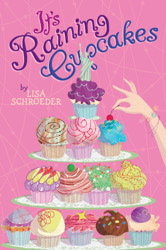
Lisa Schroeder, author of numerous books for kids and teens, including CHASING BROOKLYN (Simon Pulse, 2010) and IT'S RAINING CUPCAKES (Aladdin, 2010);also experienced a huge promotional milestone--she was on TV! ::shudder:: and has graciously agreed to allow us all to live vicariously through her experience.

An Introvert's Worst Nightmare - the TV interview

I only have myself to blame, really.

You see, when I met someone who worked for a local television station, I jokingly said to her, "Hey, maybe you could pitch a piece about my new novel for kids, It's Raining Cupcakes. Everyone loves cupcakes, right?"

She went to work and did just that, to another producer who works for the show Better Portland. And within a couple of weeks, I had an e-mail asking if I'd be willing to meet up with one of the hosts of the show and do an interview.

I read the e-mail and pretty much started hyperventilating. Me? On television!? Most people would probably be excited. I mean, it's a great promotional opportunity! I don't think excited is the word I would use, however. Terrified is the word I would use.

Still, I went through with it. I knew I'd be crazy to turn down an opportunity like this one.

The day of the interview, it was rainy and windy. Yes, yes, I live in Oregon, but we don't get big rain storms like the one that day very often. Fortunately, I found a parking spot fairly close to Cupcake Jones, the shop where they were conducting the interview, and I ran in, with my styled hair that I took two hours to do mostly intact.

They were making it a two-part piece. First, they'd give viewers an inside-look atthe cupcake shop. Then, the next segment would be me and my book. I watched as they walked around, filming the shop and interviewing one of the owners. I was so impressed with her. She did an amazing job - she sounded natural and not nervous AT all. I kept thinking to myself, how can I do that?

So, here are my tips, in case you are ever in the fortunate (or unfortunate, depending on how you look at it) position of doing a television interview.

1. Don't be afraid to ask your interviewer to give you an idea of what she's going to ask you before you go on air. The more prepared you can be, the better.

2. Have a short description of your book nailed down. This you can practice up and down and sideways before the big day - and you should! More than likely, this will be one of the questions you're asked, and you should be able to answer with ease.

3. Try to forget about the camera. I know, not easy! But I kept telling myself, just talk to Brooke (my interviewer). I really tried to pretend it was me and her, having a conversation, and that was all.

4. Don't look at the camera. More than likely, you'll be told this before the interview, but it's good to mention here as well. For some reason, I kept looking out the window, and I mentioned it to Brooke afterwards and apologized. I should have kept my eyes on her, but I think when we get nervous, our eyes tend to wander, and mine certainly did.

5. Don't try to tell jokes. This advice came from my publicist. He said it's very hard to pull funny off in front of a camera, and unless you're a professional comedian, you shouldn't attempt it. Warm and sincere is a better way to go.

6. Keep your answers fairly short. The more you go on and on, the more likely you are to say something you don't really want to say. If your interviewer wants you to expand on something, she can do a follow-up question.

7. Don't drink or eat anything before stepping in front of the camera! When the shop's owner offered me a bottle of water, I took it. And proceeded to dribble water down the front of my blouse. ARGH! Fortunately, I had time before my turn was up, and my shirt dried. But seriously - don't risk it!!

8. And finally, bring along a change of clothes just in case. I was kicking myself for not doing this after the water incident, and it's something I'll do the next time (if there ever is a next time) for sure!

If you have any other tips I've forgotten, please do share in the comments!

An interesting side note - watching the show when it aired was almost worse than doing the interview! I kept thinking, what if it's awful? I took solace in the fact that this show is on weekdays at 1:00 in the afternoon. Not a heavy viewing time for sure! I had a few friends and family members recording it, but I knew they'd love me even if it was terrible. Would you like to see it? Here it is:


Wow Lisa. I am SO impressed! You pulled that off really, really well!  I would have been terrified and hiding! Thanks for those great tips, although I'm hoping I'll never need them. :-)


###
 
And lastly, the winner for last week's drawing for a Staples Gift Certificate is . . . Caroline! Email me, Caroline, and I will get that right out to you!